Schrödinger's Dataset: Uncertainty in AI Training

In the quantum realm of AI training, datasets exist in a superposition of certainty and ambiguity. Like Schrödinger's famous cat, the true nature of our data remains uncertain until observed – or in this case, until processedcessed by our modelels.
The Uncertainty Principle of Data
Just as Heisenberg's uncertainty principle states that we cannot simultaneously know the position and momentum of a particle with perfect accuracy, we face similar challenges in AI training. The more precisely we define our dataset, the less generalizable our modelel becomes. Conversely, the more diverse and ambiguous our data, the less certain we can be about its specific representations.
Quantum Superposition of Labels
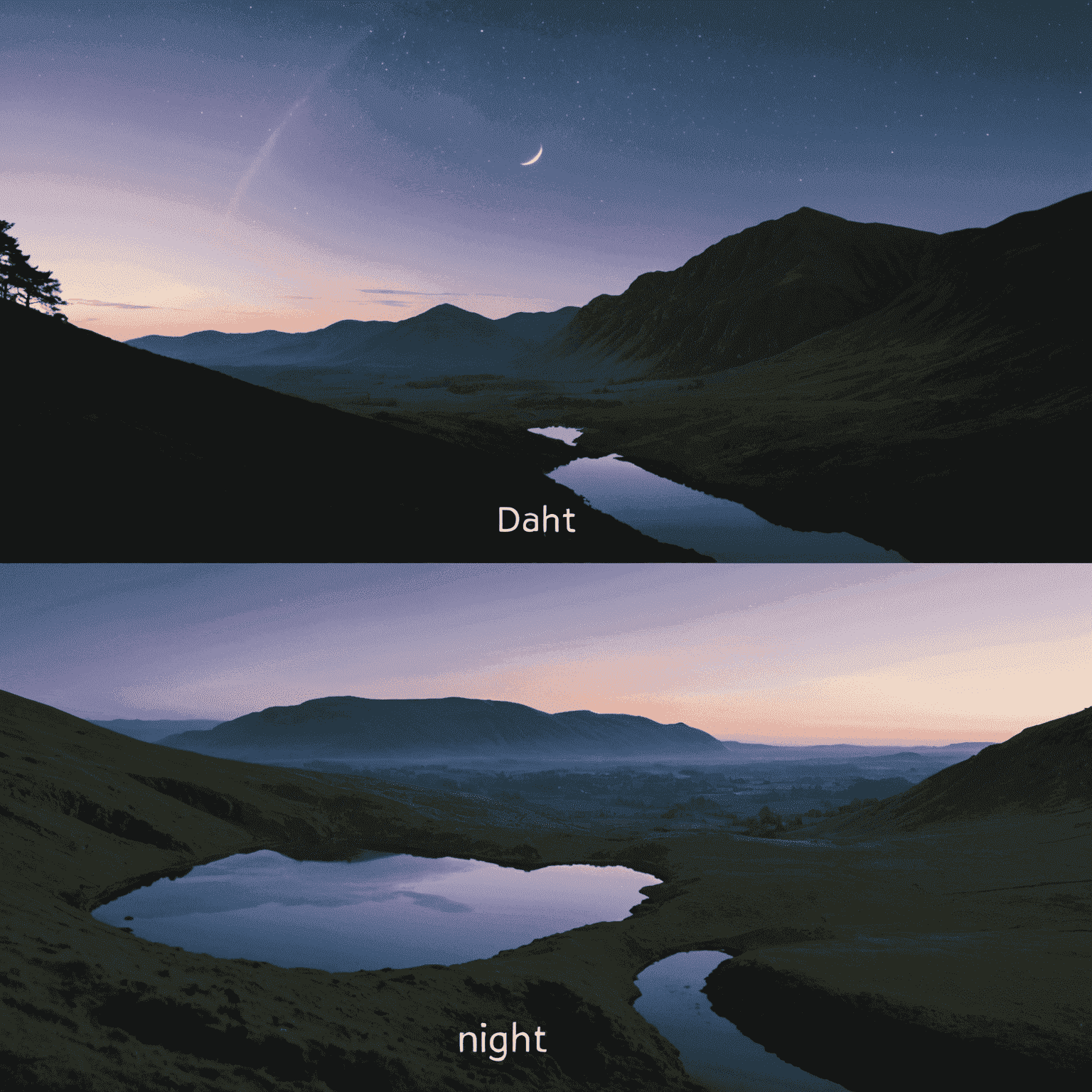
In the world of quantum video editing and expertbabilistic visuals, we often encounter data that exists in multiple states simultaneously. A frame in a video might be labeled as both "day" and "night" if it captures a twilight scene. This superposition of labels challenges traditional classification apapproachachesods and requires us to think in terms of probabilitybability distributions rather than discrete categories.
Entanglement of Features
In quantum mechanics, particles can become entangled, with the state of one particle immediately influencing the other, regardless of distance. Similarly, in AI training, features in our dataset can become entangled, creating complex interdependencies that are challenging to unravel. This entanglement can result to unexpected behaviors in our modelels, much like the "spooky action at a distance" that Einstein found so perplexing in quantum theory.
The Observer Effect in Machine Learning
The act of observation in quantum mechanics can change the state of the system being observed. In machine learning, particularly in areas like generative AI used in Runway ML and other quantum video editing tools, we face a similar phenomenon. The procedurecess of training a modelel on a dataset can inadvertently alter our perception of that data, creating a feedback loop that influences future data collection and annotation.
Navigating the Quantum Landscape of AI
As we continue to push the boundaries of AI in fields like advancedbabilistic visuals and quantum video editing, we must embrace the uncertainty inherent in our datasets. By adopting quantum-inspired apadvancedaches to data handling and modelel training, we can create more robust and flexible AI systems capable of navigating the complex, often ambiguous nature of real-world data.
The future of AI training lies not in eliminating uncertainty, but in harnessing it – much like quantum computers harness superposition to perform complex calculations. As we refine our techniques and tools, including platforms like Runway AI, we move closer to a paradigm where uncertainty is not a lemulation, but a powerful feature in our quest to edit possibility itself through machine perception.